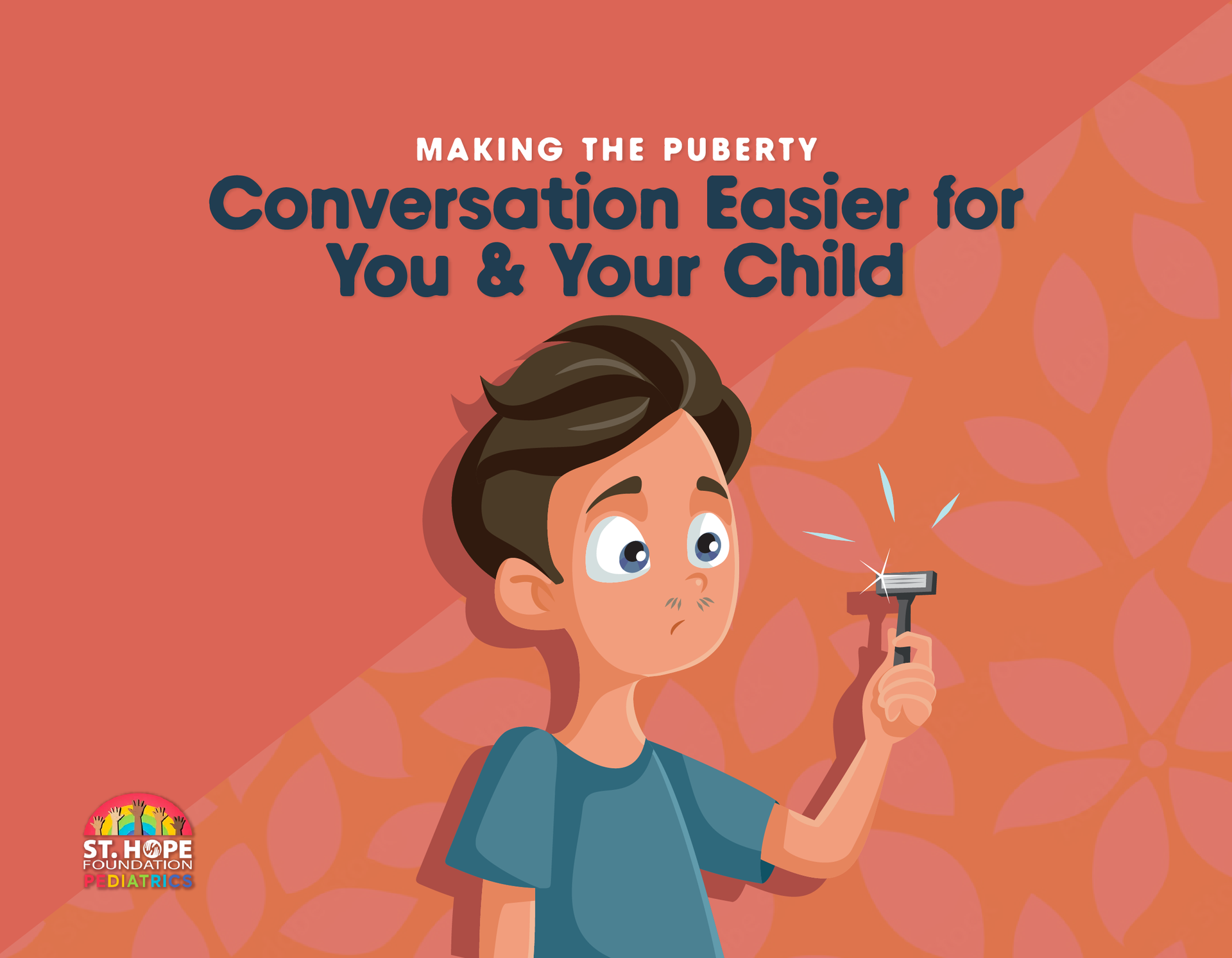
Talking to your child about puberty can feel intimidating, awkward or even overwhelming. In most cases, children handle these conversations far better when the adults around them approach the topic calmly, confidently and with genuine care. Puberty brings major changes physically and emotionally, and preparing them for what’s ahead can support their safety, confidence and long-term well-being.
While it used to be treated as a “one big talk,” child development specialists now know that discussing puberty works best when it’s ongoing, age-appropriate and grounded in trust.
Keep It Normal, Not Dramatic
Kids mirror your energy. If you approach the topic with discomfort, they’ll pick up on that and may feel embarrassed or unwilling to ask questions. When you treat puberty as a normal part of growing up, they’re much more likely to feel safe and reassured.
You don’t need to prepare a long lecture. Instead, think of it as a series of small, simple conversations woven naturally into everyday life. This takes the pressure off you and your child.
A few casual, approachable openers:
- “Have you noticed any changes lately? It’s totally normal, and everyone goes through it.”
- “If your body starts doing new things, just let me know. I’m here to help you understand it.”
- “If you ever feel confused or weirded out about anything, please ask. Nothing is a strange question.”
This keeps the door open without forcing the conversation.
Focus on What Helps Them Feel Prepared, Not Scared
Children don’t need every detail all at once. What they need is reassurance:
- Their body is supposed to change.
- Their emotions may feel different but are manageable.
- They won’t go through this alone.
Explain changes in simple terms. The goal isn’t to overwhelm them with scientific terminology; it’s to give them enough context that when something happens (like mood changes, body odor or growth spurts), they don’t feel confused or ashamed.
Reassurance helps reduce the chances that they’ll interpret changes as something “wrong” or try to hide their questions.
Talk About Body Boundaries and
Safety Honestly, Not Fearfully
Part of growing up is learning how to keep themselves safe physically, emotionally and socially. Without getting into adult areas of conversation too soon, you can still teach:
- What parts of their body are private.
- How to speak up if anyone makes them uncomfortable.
- That they can always tell you things without getting in trouble.
This foundation of safety is especially important because it teaches kids that their body belongs to them, which helps them make confident, informed decisions as they get older.
As children become preteens and teens, conversations can naturally shift toward how relationships work, what healthy boundaries look like, and how to keep themselves safe from situations that can lead to life-altering consequences, such as unplanned teen pregnancy or relationships they’re not emotionally ready for.
Let Them Lead With Their Questions
One of the best ways to make the conversation less awkward is to let your child set the pace. Many parents worry they’re going to “say the wrong thing” or introduce a topic too early. But children often reveal what they’re ready to know simply through their questions.
If they ask something you don’t know how to answer in the moment, it’s perfectly okay to say, “That’s a good question, let me think about how to explain it and we’ll talk again later.”
This shows you take their curiosity seriously and that it’s safe to talk about sensitive topics without embarrassment.
Use Books, Videos and Trusted Resources to Lighten the Pressure
You don’t have to navigate everything alone. Age-appropriate puberty books, educational videos and reputable health resources can help:
- Normalize changes
- Give visual explanations without awkwardness
- Start conversations organically
- Reinforce healthy habits
Sometimes reading together or watching something informative can relieve the pressure of a one-on-one talk and give them vocabulary they can use to communicate with you more confidently.
Puberty Isn’t a One-Time Conversation
Puberty lasts years, not weeks, and children need reassurance and guidance at every stage. Try simple check-ins every few months, or after major milestones or when questions come up. Ask things like:
- “Is anything new happening that you want to talk about?”
- “How are you feeling about school or friendships lately?”
- “If anything ever feels uncomfortable or confusing, just come get me.”
Keeping communication open builds trust that lasts into adolescence.
When to Involve a Pediatrician
Sometimes children feel more comfortable talking to a doctor. Pediatricians can explain changes in a calm, factual way and help with:
- Early or delayed puberty
- Emotional challenges during hormonal changes
- Acne, body odor or growth concerns
- Sleep issues or mood swings
- Developing healthy hygiene habits
They can also answer the questions your child may feel a little shy to ask at home.
Get Support Navigating Puberty Conversations With Your Child in Sugar Land and Greenspoint
If you want guidance on discussing puberty with your child, or if they’re already beginning the transition, St. Hope Pediatrics is here to help. Our providers create a safe, supportive environment for children and parents to navigate these changes with confidence.
Schedule an appointment with St. Hope Pediatrics today by calling (713) 778-1300.
Latest News from St. Hope