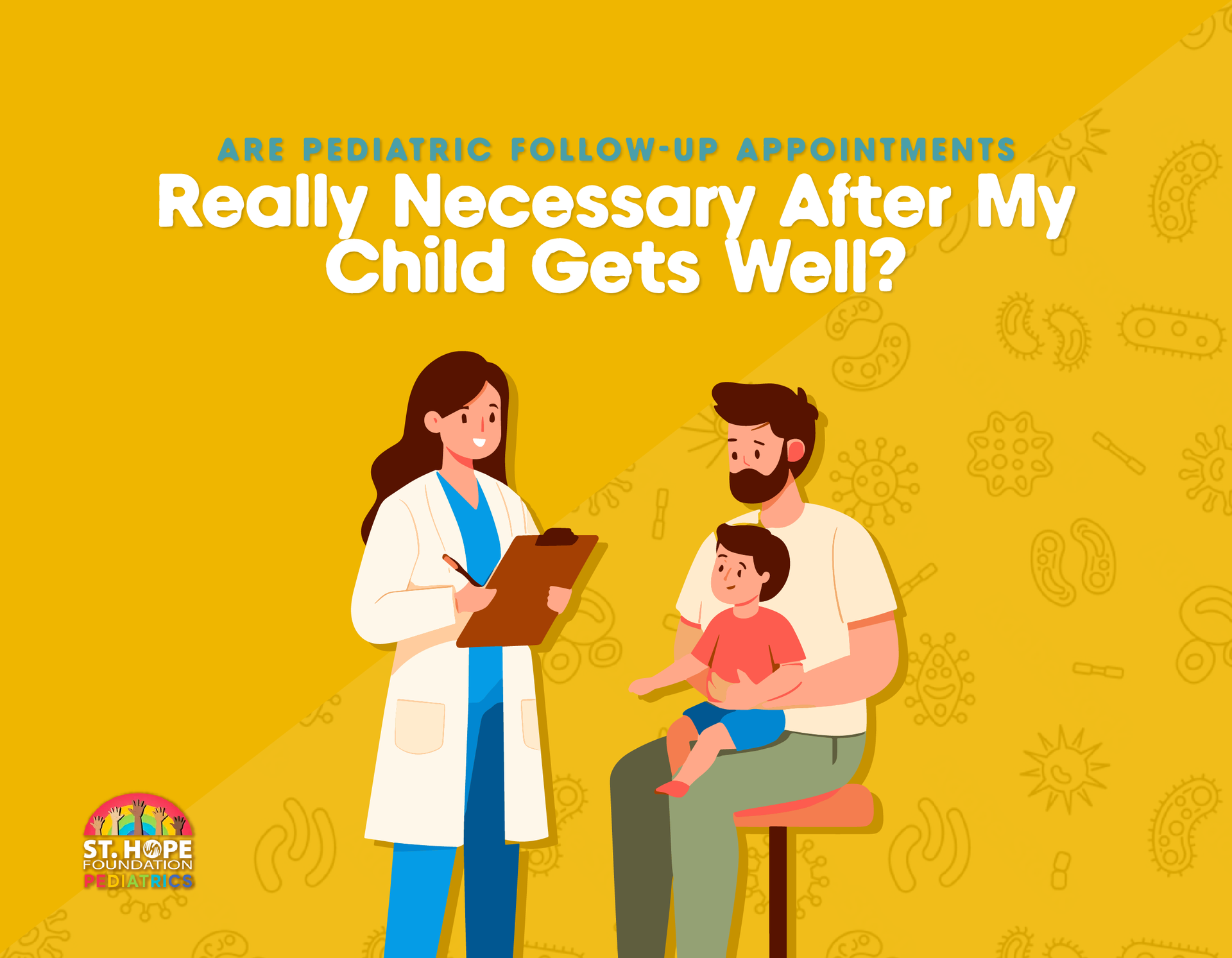
It’s a common question parents ask, often with good reason. Your child was sick, you followed the treatment plan, and now they seem back to normal. So why would a pediatrician recommend a follow-up appointment?
Many routine childhood illnesses do resolve completely without any need for follow-up. But in certain situations, pediatricians recommend follow-up visits to confirm that treatment was fully effective. There may also be important patterns, recurrence risk or developmental context the pediatrician needs to monitor.
Not Every Illness Needs a Follow-Up
Parents are right to assume that most minor childhood illnesses do not require a follow-up visit once symptoms fully resolve.
Simple viral colds, brief stomach bugs, mild rashes or short-lived fevers often don’t need additional evaluation if the child returns to baseline.
Follow-ups are typically recommended only when they add value, either by confirming recovery, preventing recurrence or identifying early signs of a bigger pattern.
The key difference in pediatrics is that children’s bodies are still developing, and symptoms can sometimes resolve even when an underlying issue hasn’t fully declared itself yet.
Why Recurrence Risk Matters in Children
One of the main reasons pediatricians recommend follow-ups is recurrence risk. Children may appear fully well after an illness, but certain conditions are known to come back, or to evolve over time. Follow-up visits allow pediatricians to ask:
- Has the symptom returned?
- Did it fully resolve, or just improve?
- Are there new or related symptoms emerging?
This is especially important because children often can’t clearly articulate what they’re feeling. A follow-up visit gives providers another opportunity to assess recovery objectively rather than relying solely on symptom reports.
Pattern Recognition Is a Core Part of Pediatric Care
A single ear infection may not be concerning, but repeated ear infections in a short window can change management. A single wheezing episode may resolve, but recurrent episodes may suggest asthma or airway sensitivity.
Follow-up appointments help pediatricians identify whether an illness was:
- A one-time event
- Part of a developing pattern
- A sign of something that needs monitoring
Without follow-up, these patterns may only become clear much later, sometimes after more disruption to a child’s health.
Illnesses That Commonly Prompt Pediatric Follow-Ups
- Ear infections: Follow-ups may be used to confirm fluid has resolved or hearing hasn’t been affected, especially in younger children or those with frequent infections.
- Respiratory illnesses: Wheezing, bronchiolitis, pneumonia or prolonged coughs often warrant follow-up to make sure lungs have fully recovered and symptoms aren’t recurring.
- Urinary tract infections: Follow-ups may help confirm symptom resolution and assess whether further evaluation is needed, especially in younger children.
- Gastrointestinal illnesses with dehydration or weight loss: Even if symptoms resolve, pediatricians may want to ensure hydration, weight and feeding patterns are back to normal.
- Concussions or head injuries: Even mild head injuries can have delayed effects on behavior, sleep or attention that only become apparent after the child “seems fine.”
- Developmentally sensitive illnesses: In infants and toddlers, illnesses that affect feeding, sleep or behavior may prompt follow-up care because these areas are closely tied to development.
Follow-Ups Aren’t Always About More Testing
Parents sometimes worry that a follow-up automatically means more labs, imaging or medications. In reality, many pediatric follow-ups are observation-based. These visits may simply involve:
- Listening to the heart or lungs again
- Checking ears or throat
- Monitoring growth or weight
- Asking targeted questions about behavior or sleep
How Follow-Ups Help Interpret Future Symptoms
One often-overlooked benefit of follow-up appointments is how they improve future care. When a pediatrician has documented recovery, they can better interpret new symptoms later. For example:
- A new cough is evaluated differently if lungs were recently rechecked and clear
- A new fever is assessed differently if a prior infection fully resolved
- Behavioral changes are interpreted more accurately with recent baseline information
This continuity helps avoid unnecessary testing later and ensures that new concerns are taken seriously when they truly are new.
When Parents Can Ask If a Follow-Up Is Optional
It’s absolutely appropriate for parents to ask:
- “Is this follow-up necessary if symptoms stay gone?”
- “What should I watch for at home?”
- “Under what circumstances should we come back?”
Good pediatric care is collaborative. Pediatricians expect these questions and are happy to explain the reasoning behind follow-up recommendations or to clarify when one may not be needed.
Pediatric Care That Balances Reassurance With Vigilance in Houston, TX
At St. Hope Pediatrics, follow-up recommendations are made thoughtfully and individually. Providers consider the type of illness, the child’s age, recurrence risk and overall development, ensuring visits are meaningful, not routine for routine’s sake.
If you ever have questions about whether a pediatric follow-up is necessary or what signs to watch for at home, contact us online or give us a call at (713) 778-1300.
Latest News from St. Hope