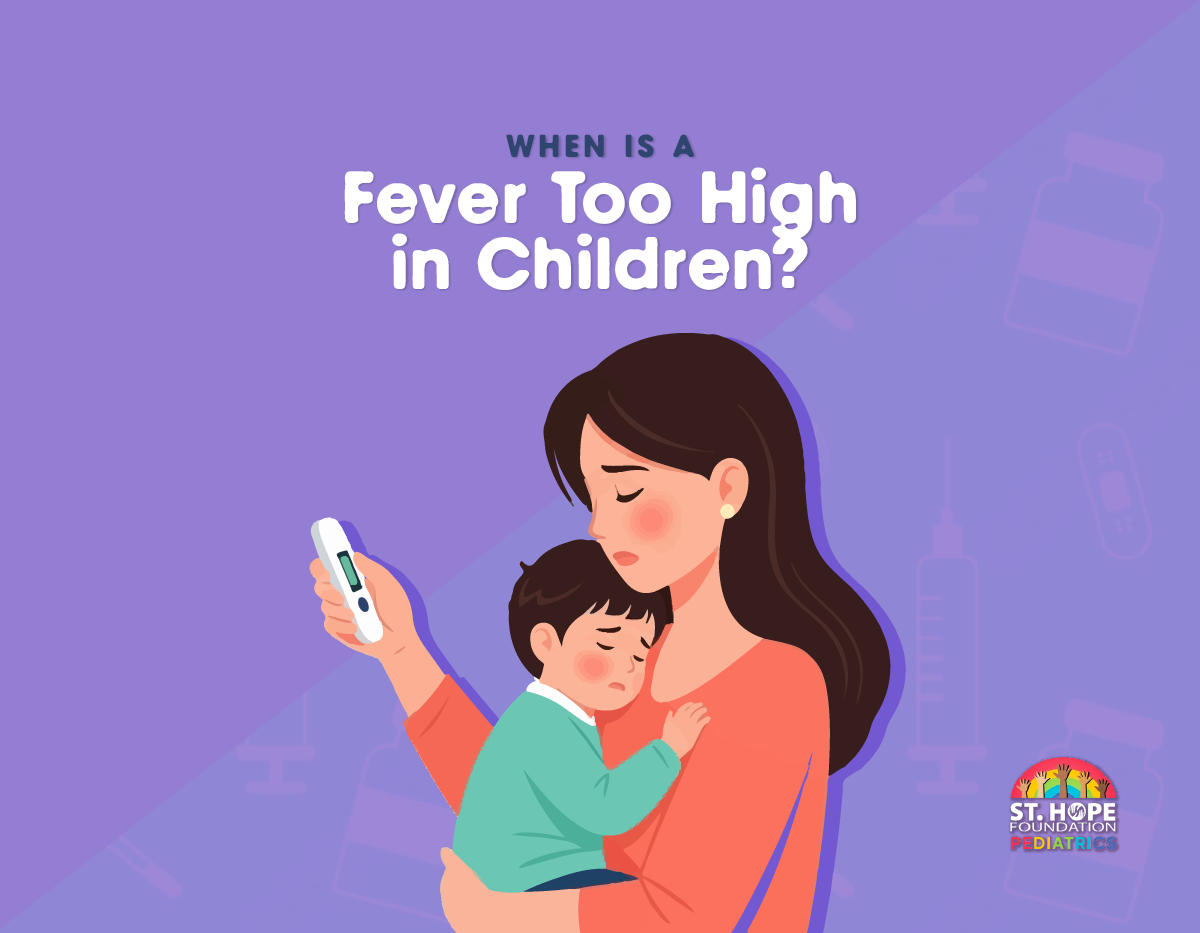
A fever can feel alarming for any parent. When your child’s forehead is warm and the thermometer climbs higher than normal, it is natural to worry. The good news is that a fever is usually a sign that the body is fighting off an infection. The more important question is not just how high the number is, but your child’s age and symptoms.
What Is Considered a Fever?
In children, a fever is generally defined as a body temperature of 100.4°F (38°C) or higher when measured rectally. Other methods, such as oral, ear or forehead thermometers, may vary slightly, but 100.4°F is the standard medical cutoff.
Fever itself is not an illness. It is a symptom that often accompanies viral or bacterial infections. In many cases, it helps the immune system work more effectively.
Fever Thresholds by Age
A child’s age plays a major role in determining when a fever becomes more concerning.
Newborns (0–3 Months)
For infants under 3 months old, any temperature of 100.4°F (38°C) or higher is considered urgent. Newborn immune systems are still developing, and even a low-grade fever can signal a serious infection.
If your baby in this age group has a fever:
- Seek immediate medical evaluation
- Do not give fever-reducing medication unless directed by a provide
- Do not delay care to “wait and see”
This age group requires prompt attention because infections can escalate quickly.
Babies (3–6 Months)
In babies between 3 and 6 months old, a fever of 100.4°F or higher should still be taken seriously. Seek medical care if:
- The fever reaches 102°F (38.9°C) or higher
- Your baby is unusually irritable or lethargic
- They are not feeding well
- You notice vomiting, diarrhea or a rash
At this age, providers may recommend monitoring mild fevers if your baby otherwise appears comfortable, but evaluation is often advised.
Infants and Toddlers (6 Months–3 Years)
Fevers are very common in this age group, particularly during viral infections. Call your pediatrician if:
- The fever reaches 102–103°F and lasts more than a day
- The fever persists longer than 3 days
- Your child shows signs of dehydration
- They are difficult to wake or unusually sluggish
A fever of 104°F or higher warrants more urgent evaluation, even if your child seems relatively comfortable.
Children Over 3 Years Old
In older children, the number on the thermometer is only part of the picture. Seek medical care if:
- The fever is 104°F or higher
- It lasts more than 3 days
- Your child has severe headache, stiff neck or persistent vomiting
- There is trouble breathing
- They are confused or hard to wake up
If your child is drinking fluids, still wants to play and is responsive, a moderate fever may be safely monitored at home with guidance from your pediatric provider.
When to Seek Urgent or Emergency Care
Regardless of age, seek immediate medical attention if your child has a fever along with:
- Difficulty breathing
- Bluish lips or face
- Seizures
- Severe headache or stiff neck
- Unresponsiveness
- Signs of severe dehydration (no tears, dry mouth, minimal urination)
- A rash that does not fade when pressed
Trust your instincts. If your child looks very ill or if something feels wrong, it is always appropriate to seek care.
Safe Fever Management at Home
If your child is otherwise stable, fever can often be managed safely at home.
Use Age-Appropriate Medication
- Acetaminophen (Tylenol) can be given to infants over 2 months old
- Ibuprofen (Advil or Motrin) can be given to children over 6 months old
Use pediatric formulations and follow dosing instructions based on your child’s weight, not just age. Never give aspirin to children due to the risk of Reye’s syndrome.
Ask your pediatrician for guidance if you're unsure about dosing.
Keep Your Child Comfortable
- Dress them in lightweight clothing
- Keep the room comfortably cool
- Offer plenty of fluids
- Allow rest
Avoid cold baths or alcohol rubs, as these can cause shivering and discomfort. Lukewarm sponge baths may help if your child is uncomfortable, but medication is usually more effective.
Focus on Behavior, Not Just the Number
One of the most important things to remember is that how your child looks and acts matters more than the temperature itself.
A child with a 103°F fever who is drinking fluids and interacting may be less concerning than a child with a 101°F fever who is lethargic and difficult to wake.
Monitoring hydration, alertness and breathing gives you more insight than focusing solely on the thermometer reading.
Does Your Child Have a Fever? Visit a Trusted Pediatric Provider in Sugar Land and Greenspoint
The pediatricians at St. Hope Healthcare Pediatrics can help you navigate childhood illnesses with confidence and clarity.
Whether your child needs urgent evaluation for a high fever or reassurance and guidance for safe home management, our team is always available to provide compassionate, evidence-based pediatric care.
If you have concerns about your child’s fever or need a same-day evaluation, contact St. Hope Healthcare Pediatrics at (713) 778-1300.
Latest News from St. Hope